Cash Back vs. Travel Points: Which $0 Fee Card Fits Your Lifestyle?
As competition between issuers has intensified, the gap between mid-tier paid cards and top-tier free cards has narrowed to almost nothing. In fact, for a strategic consumer, a “no-fee” card can often outperform a $95/year card if used correctly.
The trick isn’t just finding a card with no fee; it’s finding the one that provides outsized value in your specific high-spend categories.
Chase Freedom Flex®
This is widely considered the most valuable “free” card in existence because of how it integrates into the broader Chase ecosystem.
- The Benefit: 5% cash back on up to $1,500 in combined purchases in quarterly rotating categories (e.g., Grocery Stores, Amazon, or Gas Stations).
- The Multiplier: It also earns a permanent 3% on Dining and Drugstores.
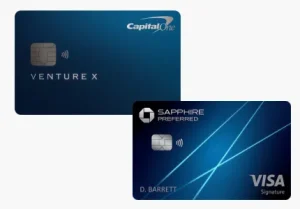
- Expert Strategy: If you eventually get a Chase Sapphire Preferred®, you can move these points over. Suddenly, your 5% “cash” becomes 5x Ultimate Rewards points, often worth 10% or more when transferred to Hyatt or United Airlines.
2. The Simple Solution: Wells Fargo Autograph
For those who find category tracking tedious, this is the gold standard of 2026.
- The Benefit: Unlimited 2% cash rewards on all purchases.
- The “Secret” Perk: Cell Phone Protection. If you pay your monthly wireless bill with the card, you get up to $600 in coverage against damage or theft (subject to a small deductible). Finding this on a $0 fee card is a major win.
3. The Lifestyle Choice: Capital One SavorOne
The ultimate card for the urban professional or student.
- The Benefit: 3% back on Dining, Entertainment, Popular Streaming, and Grocery Stores.
- The Uber Alpha: Through late 2026, it offers 10% back on Uber and Uber Eats, plus a complimentary Uber One membership. If you use rideshare twice a month, this card effectively hands you over $120/year in saved subscription fees.
4. The Renter’s Essential: Bilt Mastercard®
Until Bilt, you couldn’t earn rewards on your biggest monthly expense (rent) without paying a ~3% processing fee.
- The Benefit: 1x points on Rent payments (up to 100k points/year) with zero transaction fees.
- The Value: Bilt points are arguably the most valuable “free” currency because they transfer 1:1 to high-value partners like American Airlines and Hyatt — perks usually locked behind $450+ annual fees.
- The Catch: You must use the card at least 5 times per statement period to earn points.
5. The Adaptable Tool: Citi Custom Cash®
This card is unique because it automatically adjusts to your spending habits.
- The Benefit: 5% cash back on your top eligible spend category each billing cycle (up to the first $500 spent).
- The Strategy: Use this card only for one thing, like gas or groceries. This ensures you always get 5% on that specific category without ever having to “activate” a bonus.
Which Card is Best for Your Profile?
Choosing between “free” cards is often harder than choosing a premium one because the margins are so thin. To maximize your return, identify which of these five archetypes matches your spending habits:
The “Set It and Forget It” Minimalist
- Best Match: Wells Fargo Autograph®
- Why: You don’t want to check an app before you buy coffee. The 2% flat rate ensures you never “lose” by spending in a non-bonus category. If you spend $3,000 a month across random categories, you’re looking at a guaranteed $720/year in cash back with zero mental effort.
The Optimizer (The “Points Chaser”)
- Best Match: Chase Freedom Flex®
- Why: You view credit cards as a game you intend to win. You’re willing to track quarterly categories because you know that 5% back on $1,500 spent is $75.
The Budget-Conscious Family
- Best Match: Citi Custom Cash® or Capital One SavorOne
- Why: If your biggest monthly leaks are the grocery store and the gas station, these are your tools.