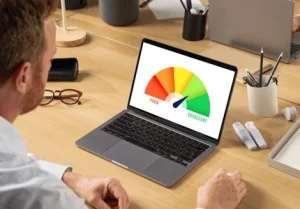
Discover the best triggers for a Credit Limit Increase, from salary bumps to low utilization windows.
A credit limit increase is one of the most underrated mechanical levers in personal finance. When executed correctly, it does two things simultaneously: it increases your available purchasing power and, more importantly, it instantly lowers your credit utilization ratio—which accounts for 30% of your FICO score.
However, asking at the wrong time can result in a “hard pull” on your credit report for nothing, or worse, a flat denial that signals to the bank that you might be experiencing financial distress.
Why the Credit Limit Matters for Your Score
To understand why you should ask for an increase, you first need to understand the math of Credit Utilization. This ratio is calculated by dividing your total credit card balances by your total credit limits.
The 10% Rule: While many experts say to stay under 30%, the highest credit scores (780+) usually belong to people whose utilization is under 10%.
By doubling your credit limit from $5,000 to $10,000 while keeping your spending at $1,000, you instantly drop your utilization from a “risky” 20% to a “premier” 10%. This is the fastest way to boost your score without paying off a single cent of debt.
The Strategic Window to Ask for a Credit Limit Increase
Timing is everything. Banks are risk-aversion machines; they want to give more money to the people who clearly don’t “need” it.
The “Six-Month” Rule
Most major issuers (Chase, Amex, Capital One) have a cooling-off period. If you just opened the account, wait at least six months before requesting an increase. This gives the bank enough data to see your payment patterns. If you’ve recently received an increase, you usually need to wait another six months before the “Request” button becomes effective again.
After a Salary Bump
Your “Ability to Pay” is a legal requirement banks must verify under the CARD Act. If you’ve received a raise, started a side hustle, or finished your degree and moved into a higher-paying role, update your income in the bank’s app first. Wait about a week, the updated income provides a fresh justification for a higher limit without the bank needing to guess your risk profile.
The “Low Utilization” Sweet Spot
The best time to ask for more credit is when you are using very little of it. If your current limit is $5,000 and you are carrying a $4,500 balance, a request for more credit looks like a desperate attempt to stay afloat. If your balance is $200, the request looks like a strategic move by a responsible borrower.
The Internal Math: Hard vs. Soft Pulls
Before you click “submit,” you must know how the bank will look at your file.
- Soft Pull: Most issuers now use “Soft Pulls” for CLI requests. This does not affect your credit score. American Express and Discover are famous for this.
- Hard Pull: Some banks (historically Chase and certain credit unions) may perform a “Hard Inquiry,” which can dip your score by 3–5 points.
Always call or use the chat feature to ask: “Will this request result in a hard inquiry on my credit report?” If the answer is yes, only proceed if the potential score boost from a lower utilization ratio outweighs the small hit from the inquiry.
How to Justify Your Request?
If you have to speak to a representative, don’t just ask for “more.” Give them a reason that fits their risk model.
- Planned Large Purchase: “I’m planning some home improvements/a major trip and would like to put the expenses on this card to earn rewards while keeping my utilization low.”
- Portfolio Balance: “I have higher limits on my other cards and would like this card to be competitive so I can make it my primary ‘daily driver’ for spending.”
- Inflation/Cost of Living: “My income has increased, and I’d like my credit limit to reflect my current financial standing.”